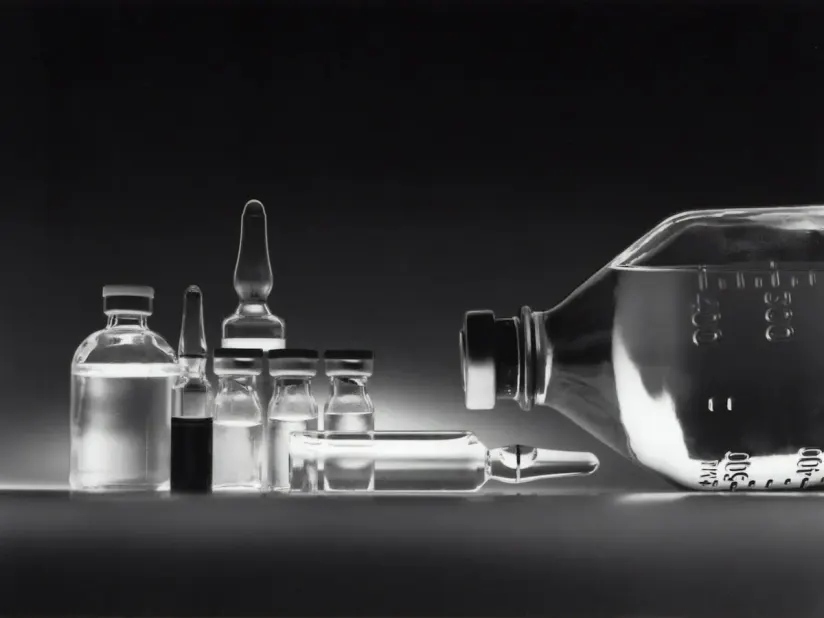

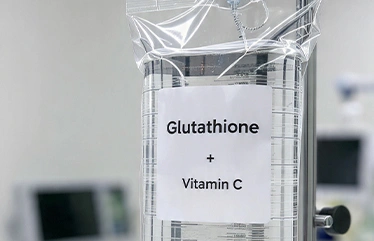
Glutathione and vitamin C both take part in the body's antioxidant systems. People often ask about this combination for general wellness or skin interest; suitability and any realistic benefit are assessed individually.
IV therapies here are selected following an appropriate consultation and individual assessment. We explain what each drip may support, the risks involved, and help you decide alongside a clinician — without overstating the benefits.
Treatment suitability and formulation are determined after professional assessment.
Intravenous (IV) therapy delivers fluids and selected ingredients directly into the bloodstream through a small cannula, bypassing digestion.
Because the intravenous route bypasses the digestive system, it is used in specific clinical situations. That does not make it automatically better than eating well or taking oral supplements — for many healthy people, the simpler route is perfectly appropriate. Which is right for you is a clinical decision.
This is why consultation and screening matter. A clinician reviews your health, medicines and allergies to decide whether an infusion is suitable, which one, and whether an alternative would serve you better.
Not automatically the better route

People often seek professional advice about the areas below. These are reasons to ask a clinician — not diagnoses, and not a promise that IV therapy is the answer.

Please read this carefully
Four to get you started, from a catalogue of 24 across three categories. Open the full directory to see every option grouped by category.
Glutathione and vitamin C both take part in the body's antioxidant systems. People often ask about this combination for general wellness or skin interest; suitability and any realistic benefit are assessed individually.
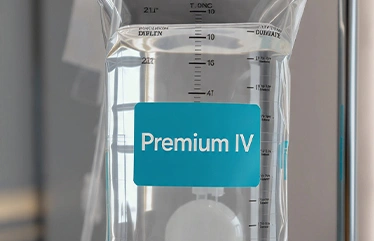
Premium IV describes a personalised infusion whose contents are selected by a clinician after assessment. Exact ingredients and doses are decided individually, not advertised as a fixed recipe.
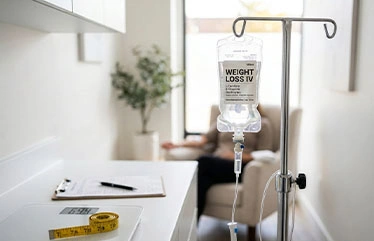
May support hydration and nutrition as one small part of a clinician-led programme. It is not a fat-burning treatment, does not change insulin resistance, and cannot replace diet, activity or medical care.
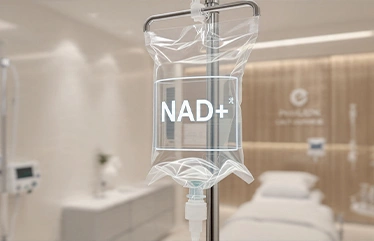
NAD+ is a coenzyme involved in energy-producing reactions inside cells. It is a popular wellness topic; this page separates its biological role from what clinical evidence currently supports.
Adding a drip to your selection does not confirm that it is suitable for you. A licensed clinician assesses suitability, formulation and availability after a consultation, and may recommend a different option — or none at all.
Submitting the form does not confirm treatment or eligibility — it simply starts the conversation.
Send a short enquiry with your details and what you're interested in. This starts a conversation — it does not confirm treatment or eligibility.
Speak with a clinician who reviews your health, medicines and goals, and explains what is and isn't realistic for you.
The clinician assesses whether an infusion is appropriate, which one, or whether another option suits you better.
If it's appropriate, treatment is arranged in a clinical setting, with monitoring and clear aftercare. If it isn't, you'll be told plainly.
How and where treatment happens, when it is appropriate for you.

Treatment in a calm, sterile clinical setting, with a clinician present and monitoring throughout your session.
Where offered, selected treatments may be arranged in your own space by a licensed team.
Subject to eligibility and a licensed home-healthcare service — confirmed case by case.
Clear aftercare guidance, and a point of contact for any questions once your session is over.
IV therapy is generally well tolerated when it's appropriate for you, but it carries real risks. Here is how those are managed — and we don't hide them.

Everything that has to happen before an infusion can even be considered.
Your history, conditions and reasons for enquiring are reviewed before anything is arranged.
Current medicines, supplements and known allergies are checked for interactions and risks.
Some formulas need blood tests or further checks before they can be considered.
What goes into the bag, if anything, is a clinical decision — not a menu choice.
How the session itself is prepared, given and watched over.
Infusions are prepared and given using sterile technique in a licensed setting.
You're observed throughout, and treatment can be paused or stopped at any time.
What you leave with, and what to do if something doesn't feel right.
You leave with clear guidance and know what to watch for afterwards.
We explain the symptoms that mean you should seek urgent medical care.
The things we hold ourselves to. Where we can't yet prove a claim, we'd rather leave it out than overstate it.
Care is delivered by trained, licensed clinicians in an appropriate setting.
Decisions follow your assessment, not a fixed script or upsell.
We separate established roles from weak claims, and say when evidence is limited.
A calm, clean space designed to make treatment straightforward.
Assessment, screening and monitoring come before any infusion.
Aftercare guidance and a point of contact for follow-up questions.
Plain-language explainers to help you weigh IV therapy sensibly, on your own time.
Foundations
How intravenous administration works, why screening matters, and how it compares with oral supplements.
Read moreSuitability
The situations people ask about, why these are not diagnoses, and why an assessment is essential.
Read moreFull guide
A plain-language walkthrough of the journey from enquiry to aftercare, with realistic expectations.
Read moreStraight answers on suitability, safety and what to expect.
IV (intravenous) therapy delivers sterile fluids, and sometimes selected vitamins, minerals or other ingredients, directly into a vein through a small cannula. It is carried out by a trained clinical team in a licensed setting, after an assessment of whether it is appropriate for you.
A clinician reviews your health, medicines, allergies and reasons for enquiring, then decides whether an infusion is appropriate and, if so, which one. Nothing is chosen from a menu without that assessment, and the clinician may recommend a different option or none at all.
This guide has no verified price list, so it does not quote an AED figure. Request an itemised written quote for the proposed treatment, including assessment, ingredients, administration, any required tests, follow-up and any visit fee. Ask what you would pay if the assessment recommends no infusion, and confirm cancellation terms before paying. A forum anecdote or another provider's advertised starting price is not your quotation.
No. It is not suitable for everyone, and suitability depends on an individual assessment. Some conditions, medicines, allergies, and pregnancy or breastfeeding, may mean it is not appropriate, or that extra screening is needed first.
Yes. Risks include discomfort, bruising, irritation or infection at the cannula site, reactions to ingredients, and problems if fluid or electrolyte treatment is inappropriate. Serious reactions are possible; supervision does not make an infusion risk-free. Tell the team promptly if you feel unwell or notice pain, swelling or leakage. Severe symptoms need urgent medical assessment.
No. IV therapy is not a replacement for a healthy diet, for prescribed medical treatment, or for proper investigation of symptoms. It may play a supportive role in some situations, but it does not treat medical conditions on its own.
Authoritative resources used to support the educational information presented across this website.
From the blog
Comparing options
Compare IV vitamin therapy with oral supplements: the treatment goal, absorption, evidence, risks and questions to ask before a consultation in Dubai.
Read articleUnderstanding fatigue
Thinking about an IV drip for low energy in Dubai? Learn why persistent fatigue needs assessment, what to discuss and how to judge wellness claims.
Read articleTests and decisions
Understand why tests before IV vitamin therapy should answer a clinical question, how results are interpreted and what to ask about follow-up in Dubai.
Read articleRepeat-treatment decisions
Weekly or monthly IV drips? Learn what to ask about repeat sessions, monitoring, changing symptoms and stopping a course before buying a package in Dubai.
Read article
Tell us what you're considering and we'll arrange a consultation. Any treatment depends on a professional assessment of whether it's right for you — the enquiry itself confirms nothing.
Treatment depends on an individual assessment by a licensed clinician. This form is not for medical emergencies.
We use optional analytics cookies to improve this site. May we enable them?