
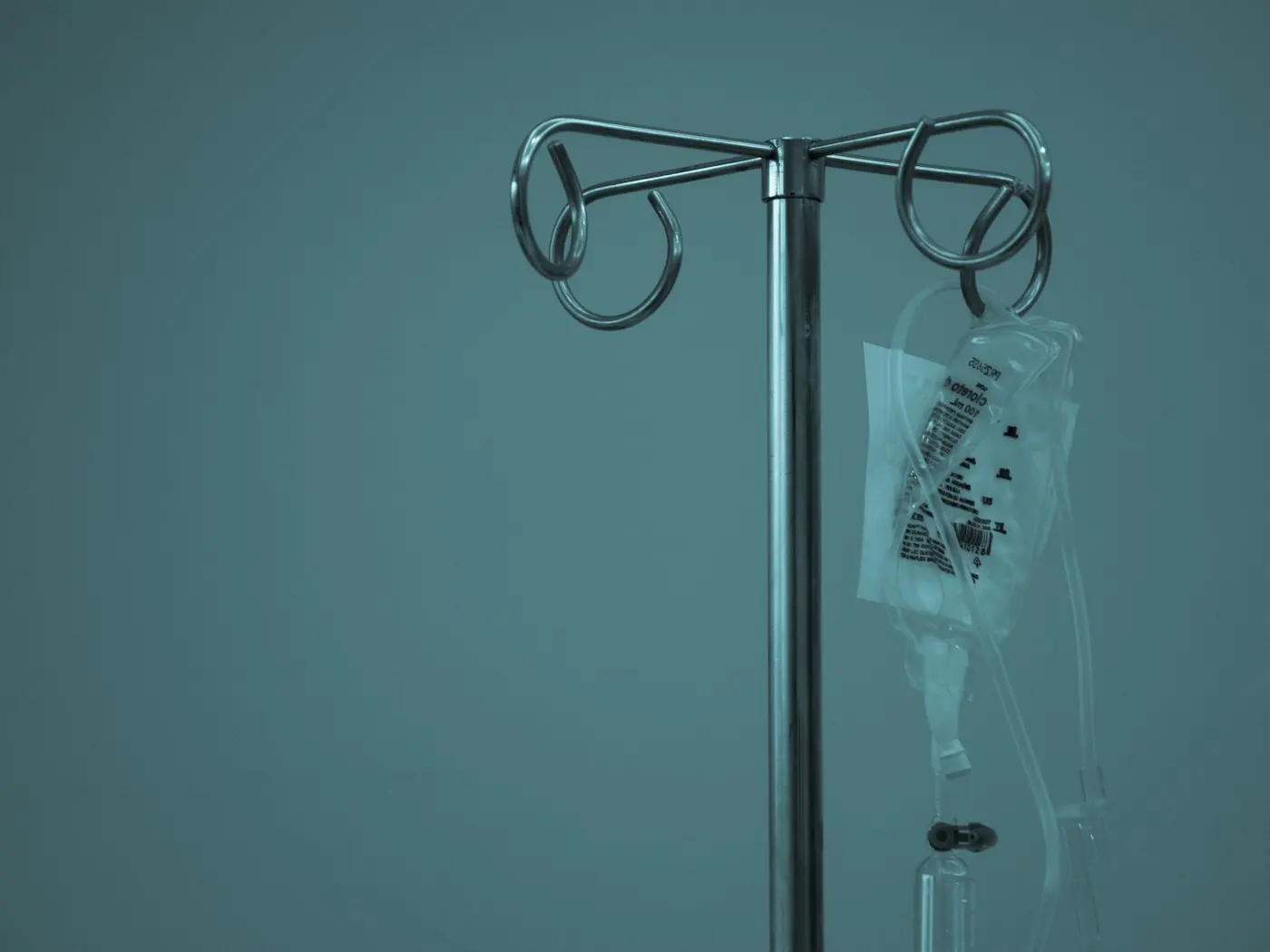
A compact infusion aimed at rehydration rather than a long formulation. Rehydrating can help someone who is genuinely dehydrated feel better; it is not a source of energy in itself, and severe dehydration needs medical care.
Supportive care around stress — not a treatment for anxiety or depression.
Demanding periods are real, and so is the wish to do something about them. This drip is built around nutrients with a recognised role in normal nervous-system function. It is not a treatment for anxiety, depression or burnout, and it is not a substitute for rest, support or proper mental-health care — a distinction this page keeps front and centre.

Several B vitamins and magnesium take part in normal nervous-system function and in the reactions that release energy from food. When someone is under sustained pressure, their eating, sleep and hydration often slip at the same time, which is one reason nutrition comes into the conversation at all.
That is as far as the biology takes us. There is no good evidence that an infusion reduces stress, lifts mood or protects against burnout in a person who is otherwise well nourished. Where stress is affecting your sleep, work or relationships, the useful step is a proper assessment — not a drip.
Framed as areas people ask about — not promised outcomes.
This list is not exhaustive. Suitability is always decided individually by a clinician.

No reduction in stress, anxiety or low mood is promised. Any sense of feeling better after a session may simply reflect rehydration, an hour of rest, or the fact that someone listened — all worth having, none of them a treatment effect.
If stress is persistent or affecting your daily life, please speak to a doctor or a mental-health professional. An infusion should never delay that conversation, and a responsible clinician will say so.
Written by IV Drips Dubai editorial team
Published 2026-08-12 · Last updated 2026-08-13
Medical disclaimer
We cannot claim that. This is not a treatment for anxiety or any mental-health condition. If anxiety is affecting you, please speak to a doctor or a mental-health professional — that is a far more useful step than an infusion.
Magnesium takes part in normal nervous and muscle function, and low levels can cause symptoms. That does not mean an infusion produces a calming effect in someone whose levels are normal, and we would not promise one.
Tell the clinician about every medicine you take, including psychiatric ones. They will review interactions before deciding whether anything is appropriate, and may advise against it.
A compact infusion aimed at rehydration rather than a long formulation. Rehydrating can help someone who is genuinely dehydrated feel better; it is not a source of energy in itself, and severe dehydration needs medical care.

Certain B vitamins have a recognised role in normal nervous-system function. No improvement in memory or concentration is promised, and new or worsening memory problems need medical assessment, not an infusion.

Built around nutrients the body uses in energy-producing reactions. Feeling tired has many possible causes, and an infusion is not a substitute for finding out why.
Ask us whether it's appropriate for you. A clinician will assess your suitability first — the request itself doesn't confirm treatment.
Treatment depends on an individual assessment by a licensed clinician. This form is not for medical emergencies.